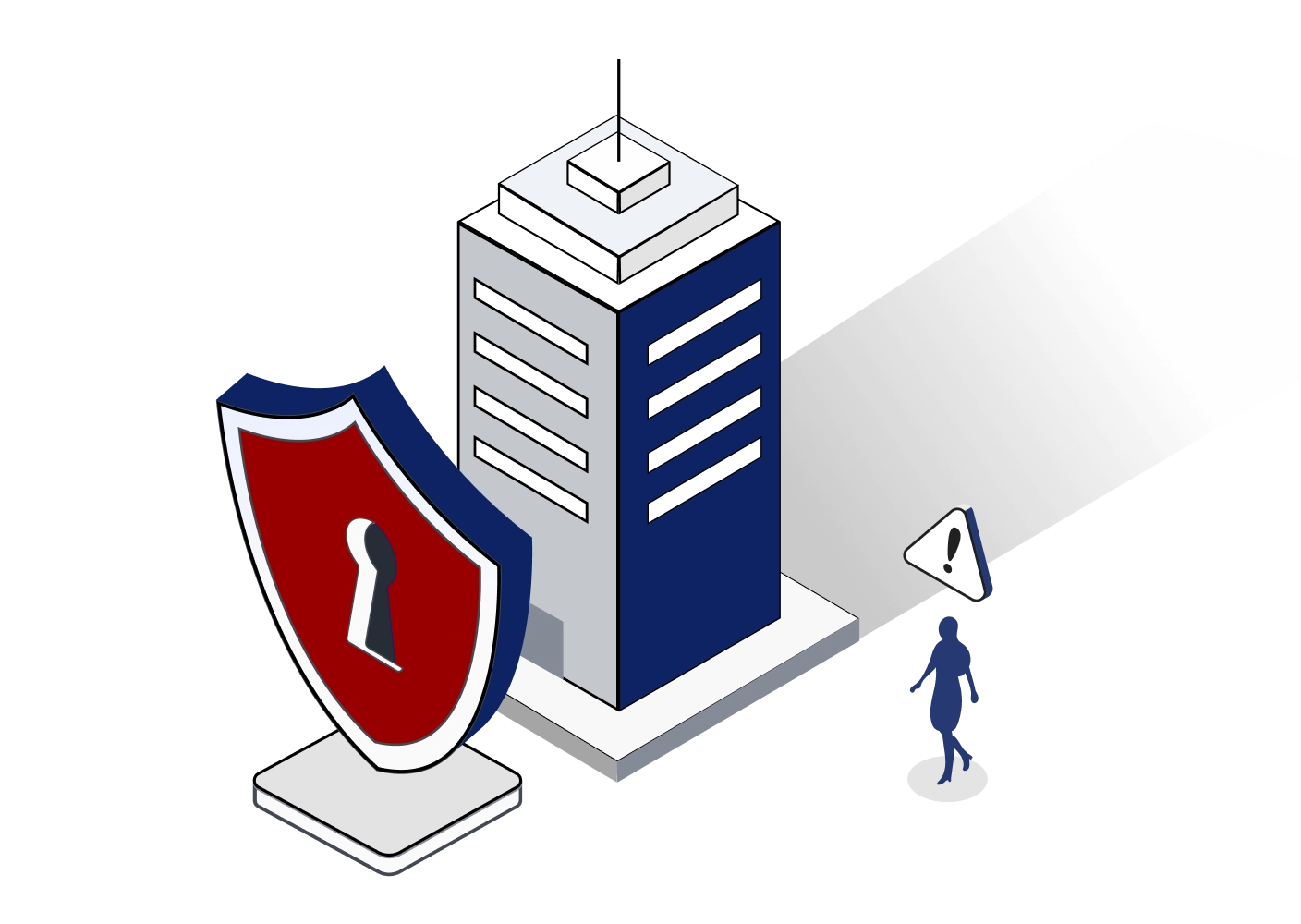



The team is the first line of defense
We train your team practically, using industry-specific scenarios in phishing detection, secure handling of customer data, and risk awareness.
Non-binding · 15 minutes · Free






Training and awareness-raising

Marvin Süß

Consultant
mip Consult GmbH
Strengthen the security awareness in your company.
With hands-on training and industry-specific scenarios, you specifically sensitize employees and executives to cyber risks. In this way, you promote the safe handling of sensitive data, strengthen risk awareness, and at the same time take into account relevant requirements from NIS-2.
Make cybersecurity a permanent part of your corporate culture.
You decide: in-person, webinar or e-learning
In-person training
On-site in your company: interactive, with case studies and always up-to-date topics relevant to your team. The first choice for initial training and for areas with sensitive data.
Webinar
Live and location-independent – same content, same opportunity for questions, no travel costs. Ideal for distributed teams, multiple locations, and short-term deadlines.
E-Learning
Browser-based on our learning platform, available anytime. With knowledge tests and documented learning progress – for new employees, home office, and anyone who missed an appointment.
Refresher training
Data protection must be regularly trained. We refresh basic knowledge and deepen selected topics in consultation – from data subject rights to cyberattacks.
White-Label for your LMS
Our proven privacy protection course in your own style: with your logo, colors, and content – as an MP4 video that can be integrated into any learning management system.
Our learning platform or your LMS.
You use our web-based training platform or we integrate our training videos into your own learning management system (LMS). In both cases, your employees learn flexibly, regardless of time and location.
* Prices are based on format, number of participants, and degree of customization. Contact us for a free initial consultation and a personalized quote.
Training that sticks:
online, onsite or both.
Non-binding · 15 minutes · Free
Frequently asked questions
Are training courses legally required?
Yes, although distributed across several regulations. In data protection, awareness-raising and training of the involved employees, pursuant to Article 39(1)(b) GDPR, are among the tasks of the data protection officer; the obligation itself applies to you as the controller. For institutions under the BSIG, basic training and awareness-raising measures in the field of security are added as their own mandatory item.
Does management also need to be trained?
If your company falls under the BSIG: yes. Members of the management team must regularly attend training sessions; this is explicitly stated in the law and is not linked to employee training. The background is personal liability: anyone who has to approve and monitor measures must also be able to assess them.
How often do we need to train?
There is no legally mandated frequency. In practice, an annual cycle has established itself, supplemented by onboarding training and on-demand refresher training, for example after an incident, for new systems or changed processes. This is proven practice, not an official requirement.
Do we have to be able to prove the training?
Yes. The accountability requirement under Art. 5(2) GDPR means that you must be able to demonstrate compliance with your obligations; therefore, in training sessions, you must provide the date, content, participants, and, if applicable, test results. For NIS-2, documentation arises from the requirement to demonstrate the risk management measures. In an emergency, a training session without proof is not a training session.
What content does the training cover?
We train your team in phishing detection, safe handling of customer data, and risk awareness, practically using industry-specific scenarios rather than general examples.
Does this also apply to the use of AI?
Yes. Article 4 of the AI Regulation requires providers and operators to take measures to ensure their employees have AI literacy. The provision has been in effect since February 2, 2025, regardless of whether you are using high-risk systems. Training is the obvious way to meet this requirement.